
Leg Extension Machine Exercise: Setup, Form, and Knee Comfort
Estimated reading time: 8 minutes
What muscles does the leg extension work?
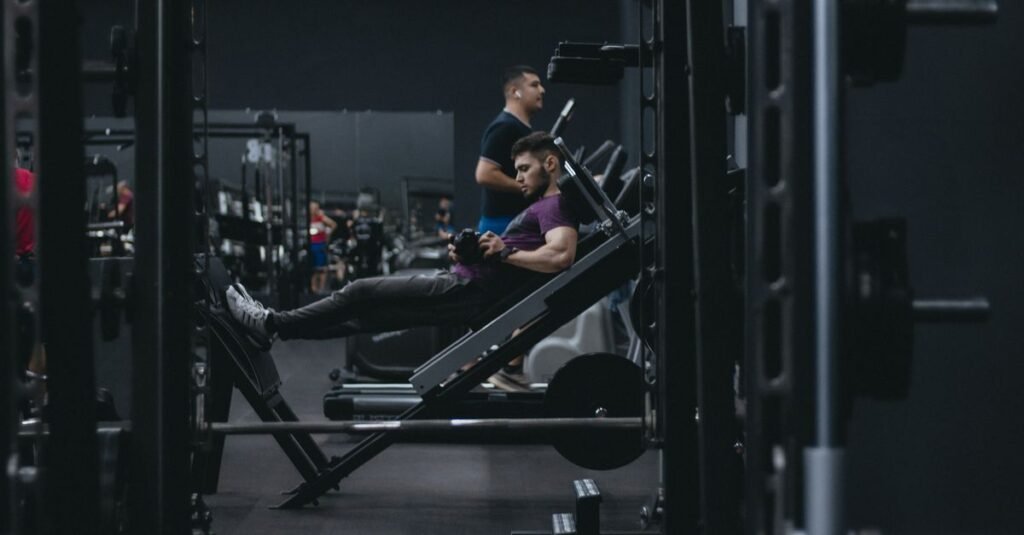
The leg extension machine is a gym exercise for training your quadriceps—the muscles on the front of your thighs—without having to balance a barbell or coordinate a squat. Sit down, line your knees up with the machine’s pivot, place the roller just above your ankles, and straighten your legs smoothly. The important part isn’t how high you can move the weight stack. It’s whether your knees feel comfortable and you can control the movement in both directions.
That sounds straightforward, but a poorly adjusted seat or an overly heavy load can make the exercise awkward. If the pad slides along your shins, your hips lift off the seat, or you have to kick to start each repetition, fix the setup or reduce the weight before continuing.
Leg extensions can be a useful part of quad training. They aren’t a complete leg workout, and there’s no single machine setting or range of motion that suits every knee.
The leg extension primarily trains the quadriceps, a group of four muscles:
- Rectus femoris
- Vastus lateralis
- Vastus medialis
- Vastus intermedius
Their shared job is to straighten the knee. That action is called knee extension, which explains the exercise’s name.
You may also see leg extensions described as an open-chain exercise. This means your lower leg moves freely rather than your foot staying planted against the floor or a platform. It’s a description of the movement, not a verdict on whether it’s good or bad.
Unlike a squat, the leg extension doesn’t ask you to move your hips and knees together while supporting your body. Your seat and backrest provide support, allowing you to focus on knee extension.
That isolation is useful when you want additional quad work. It’s also the exercise’s limitation: leg extensions don’t provide the same broad leg and trunk involvement as squats or other compound movements. The American Council on Exercise highlights that distinction when comparing leg extensions with squats.
How to adjust the leg extension machine
Spend a moment on the setup before choosing a challenging weight. A machine that fits the person before you may not fit you.
Align your knee with the machine’s pivot
Look for the point around which the machine’s lever arm rotates. Depending on the design, you may see a round joint or a marked axis beside the seat.
Adjust the seat or backrest so the side of your knee lines up as closely as possible with that pivot when you’re seated. Usually, this means changing how far forward or backward you sit.
Don’t assume the adjustment number is meaningful across machines. “Setting three” on one model may feel completely different on another.
If you can’t identify the pivot or work out the controls, ask a gym staff member to show you. That’s more useful than guessing while the machine is loaded.
Put the roller above your ankles
Position the roller against your lower shins, just above the ankles. It shouldn’t sit across your feet or press high up your shins.
The pad should stay reasonably secure as you move. If it rolls awkwardly along your legs or creates uncomfortable pressure, check both the roller adjustment and the seat position.
Settle into the seat
Keep your back against the backrest and your hips on the seat. Hold the handles for stability rather than using them to pull yourself into a strained position.
Your thighs should feel supported. You shouldn’t need to slide forward or lean backward to complete each repetition.
Some machines also let you adjust the starting angle. Choose a position you can move from comfortably; don’t force yourself into the deepest available bend just because the setting exists.
Test the setup with a light load
Do a few easy repetitions before starting your working sets. Check that:
- The roller stays in a comfortable position.
- Your hips and back remain supported.
- You can straighten and bend your knees smoothly.
- You don’t feel joint pain or need to jerk the weight upward.
Machine designs vary. If a machine still feels wrong after sensible adjustments, you don’t have to make it work at any cost.
How to perform a controlled repetition
Once you’re positioned correctly, the goal is simple: move your lower legs while keeping the rest of your body steady.
- Start with your knees bent in a comfortable position. Keep your back against the pad and hold the handles.
- Straighten your knees smoothly. Lift the roller without kicking or throwing your legs upward.
- Reach a comfortable endpoint. Don’t snap your knees straight or force them beyond their natural straight position.
- Lower the weight under control. Bend your knees gradually instead of letting the stack pull your legs down.
- Repeat without bouncing. Keep your hips on the seat and avoid using torso movement to start the next rep.
The lowering part is sometimes called the eccentric phase: your quadriceps remain active while lengthening. You don’t need an elaborate tempo count, but you should be able to control the descent rather than let the stack crash.
Do you have to stop short of straight knees?
Not necessarily. “Never straighten your knees” is too broad, just as “always force a full lockout” is too broad.
A comfortable straight-knee position is different from a forceful snap or hyperextension. Your usable range depends on the machine, your mobility, your symptoms, and any restrictions from a clinician.
If reaching the endpoint causes pain, don’t keep repeating it to prove you can complete the movement. Reduce the demand and reassess. People with an injury or rehabilitation plan need more specific guidance than a general form cue.
Sets, repetitions, rest, and progression
For a beginner, 2–3 sets of 10–15 controlled repetitions is a practical starting option, not a rule everyone must follow. Miami Dade College’s fitness guide suggests three sets of 12–15 repetitions with 60–90 seconds of rest for beginners.
Use those recommendations as a starting framework:
| Variable | Practical starting point |
|---|---|
| Load | Light enough to keep your hips still and control the lowering phase |
| Sets | 2–3 working sets |
| Repetitions | 10–15 per set |
| Rest | About 60–90 seconds; allow more time if needed to repeat good technique |
| Range | A comfortable, controlled range appropriate for you |
The correct weight is the one that matches the intended reps without changing the exercise into a swing. If you aim for 12 repetitions but start lifting your hips at rep eight, the load is too demanding for that target today.
To progress, build repetitions first. Once you can complete your chosen sets near the top of the range with consistent technique, try a modest increase in weight.
For example, imagine you’re doing two sets of 10. Over later sessions, you gradually reach two controlled sets of 15. You could then try the next small weight increment and build up again. That’s an illustration, not a promised timeline.
If the next plate is a large jump and ruins your control, return to the previous load. There’s no benefit in increasing the number on the stack while losing the movement you intended to train.
Where leg extensions fit in a leg workout
If squats or another compound exercise are the main focus of your session, doing them before leg extensions is a sensible default. That keeps your quads fresher for the movement you want to prioritize, then uses the machine for additional focused work.
For instance, a workout might include a squat or leg press, a hip-focused exercise, and then leg extensions. The exact combination depends on your goals and the rest of your training—not every session needs every exercise.
Doing extensions first isn’t automatically wrong. It may suit someone whose priority is quad isolation. Just recognize that tiring your quads beforehand can change how your later exercises feel and how much work you can perform.
Leg extension versus squat
The useful comparison isn’t “Which exercise wins?” It’s “What job do I need this exercise to do?”
Leg extensions provide supported, focused knee-extension work. They’re useful when you want to train the quads without adding another whole-body movement.
Squats involve the hips, knees, and trunk together. They offer broader muscular involvement and practice moving your body under load.
Neither choice makes the other pointless. But replacing all compound leg work with extensions leaves you with a narrower training stimulus.
If the machine doesn’t fit or isn’t available, squats and leg presses are possible alternatives for training the quads. They aren’t exact replacements, and they aren’t automatically more comfortable for someone with knee symptoms.
Are leg extensions bad for your knees?
The blanket claim that leg extensions damage knees goes beyond what the supplied evidence establishes.
Knee loading changes with resistance, knee angle, and machine setup. Biomechanical research on leg-extension equipment also identifies equipment geometry and pad position as factors that affect shear forces—forces that act across joint structures.
That matters for exercise selection and setup, but measuring a joint force is not the same as demonstrating that an exercise causes injury. The research provided doesn’t establish one universally safe weight or range, either.
A better approach is to consider the person, the machine, and the response to the exercise.
Muscle effort and knee pain aren’t the same thing
A working or burning sensation in the front of your thighs can accompany quad training. Sharp pain, catching, or increasing discomfort around the knee isn’t something to dismiss as a productive burn.
General fitness guidance notes that leg extensions may aggravate some cases of pain around the front of the knee, particularly near full extension. Reducing the load or shortening the range may make the movement more tolerable for some people. That isn’t a universal treatment, and it doesn’t identify the cause of the pain.
If discomfort appears, stop the set and check the setup. Don’t repeatedly test a painful movement with heavier weights.
For persistent knee pain, a recent injury, surgery, or an ACL rehabilitation plan, ask a qualified clinician or physical therapist about appropriate exercise selection, loading, and range. Follow your rehabilitation guidance rather than substituting a generic gym recommendation.
This article provides general exercise education, not individualized medical or rehabilitation advice.
Common mistakes worth fixing
Most technique problems have a straightforward correction.
The roller presses high on your shins.
Reposition it just above your ankles, then check knee-to-pivot alignment again.
Your hips lift or your torso rocks.
Reduce the load. The seat should support your body while your lower legs move.
You kick the first repetition upward.
Use a lighter weight and start smoothly. Momentum can disguise a load you can’t actually control.
The weight stack crashes on the way down.
Lower it deliberately. If you can’t control the return, the set is over or the weight needs reducing.
You force a painful endpoint.
Stop chasing a particular angle. Comfortable range and appropriate clinical guidance matter more than matching someone else’s repetition.
At your next session, make the first task fitting the machine—not selecting a heavy weight. Test a few light repetitions, check the pivot and roller position, and only then choose a load you can move smoothly for your planned sets.
Frequently asked questions
What muscles do leg extensions work?
The leg extension primarily trains the quadriceps: the rectus femoris, vastus lateralis, vastus medialis, and vastus intermedius. These muscles work together to straighten the knee.
How should I set up a leg extension machine?
Line the side of your knee up as closely as possible with the machine’s pivot, position the roller against your lower shins just above the ankles, and keep your back and hips supported. Test the setup with a light load before starting your working sets.
How many sets and repetitions should I do?
For a beginner, 2–3 sets of 10–15 controlled repetitions is a practical starting option, with about 60–90 seconds of rest. Choose a load that lets you keep your hips still and control the lowering phase.
Are leg extensions bad for your knees?
The blanket claim that leg extensions damage knees goes beyond what the supplied evidence establishes. Knee loading varies with resistance, knee angle, and machine setup. Stop if you experience pain, and seek individualized guidance for persistent symptoms, a recent injury, surgery, or rehabilitation.
Should I do leg extensions before or after squats?
If squats or another compound exercise are the main focus of your session, doing them before leg extensions is a sensible default. Doing extensions first may suit someone whose priority is quad isolation, but tiring your quads beforehand can affect later exercises.