
How to Choose a Gym Bag—and Keep It Organized and Fresh
Estimated reading time: 8 minutes
The right gym bag holds what you actually use, feels comfortable on your journey, and lets you separate clean clothes from sweaty gear. It also needs to be easy to empty and dry. A clever shoe compartment won’t help much if yesterday’s damp socks are still inside it.
If you’re fitting workouts around work, errands, or a commute, choose for that whole routine—not just the hour you spend exercising. A compact bag might be perfect for a class near home but frustrating when you also need a shower kit, work clothes, and lunch.
Before buying anything, lay out what you take to a typical workout. That pile is a better starting point than a long list of product features.
Choose the Size Around Your Actual Kit
There’s no single gym bag size that suits everyone. Your shoes, towel, clothing, and sport-specific gear determine how much room you need—and the bag’s shape determines how usable that room is.
Start with your busiest normal gym day. If you shower at the gym twice a week, include the towel and toiletries. If you only occasionally bring bulky equipment, decide whether it really needs permanent space.
| Your routine | What the bag needs to accommodate | What to prioritize |
|---|---|---|
| A short workout close to home | A few basics, perhaps shoes and a light layer | Compact size and easy access |
| Gym before or after work | Workout kit, a change of clothes, toiletries, possibly work items | Comfortable carrying and clean/used separation |
| Swimming | Swimwear, towel, toiletries, dry clothes | Temporary wet-item storage and easy drying |
| Team sports or equipment-heavy training | Shoes, clothing, towel, personal equipment | Enough usable space and a wide opening |
Check dimensions rather than relying only on capacity in liters. A narrow compartment may technically have enough volume but still make shoes awkward to pack. Likewise, an external pocket can take up internal space when you fill it.
If you can examine a bag in person, open every compartment. Picture where your largest items will go, then check whether you could reach your water bottle or keys without unpacking everything.
A little spare room makes packing easier. Too much can encourage you to carry things that never leave the bag.
Gym Duffel vs. Backpack: Follow the Journey
Neither style is universally better. The useful comparison is how you’ll carry it and where you’ll unpack it.
A duffel makes the contents easier to see
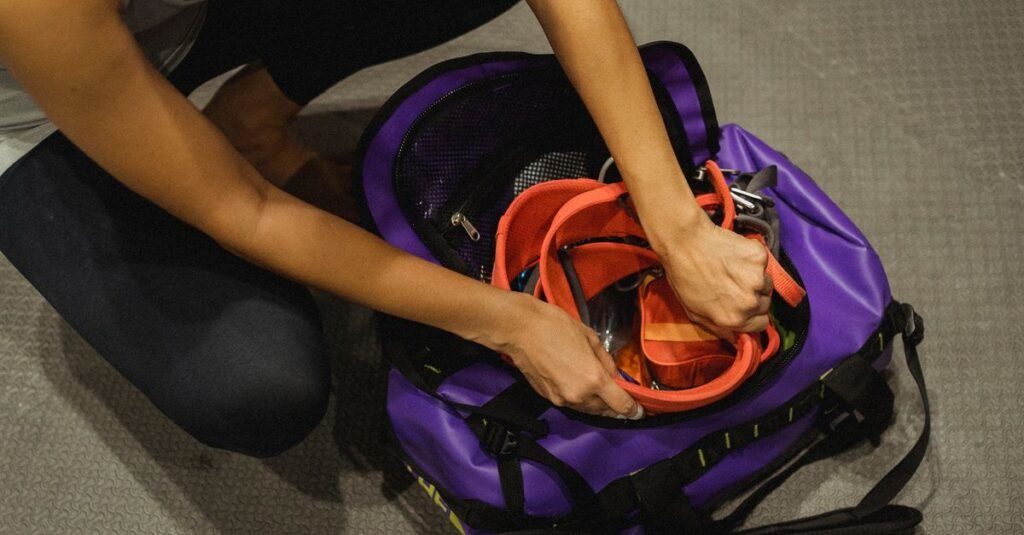
A wide-opening gym duffel can be convenient when you’re changing clothes or looking for a towel. You can often place bulky items side by side rather than stacking everything.
It’s worth considering if you mostly travel by car or carry the bag short distances. Check the handles and shoulder strap with a realistic load, though. A bag that feels comfortable empty may be awkward once it contains shoes, a full bottle, and toiletries.
A backpack keeps your hands free
A backpack may suit walking, public transport, or a commute involving several stops. If it will also carry a laptop or paperwork, look for a layout that keeps those items apart from used workout gear.
Pay attention to access. A deep, top-opening bag can leave small items buried beneath clothes. A wider opening may make packing and emptying simpler.
The most useful test is ordinary: can you comfortably carry your usual load, reach the things you need, and fit the bag where it has to go? Check locker dimensions if locker space is a recurring problem.
Pay for Features You’ll Actually Use
More pockets don’t necessarily mean better organization. They help when each has a clear job; otherwise, they become places to forget socks and snack wrappers.
Shoe and wet compartments
A separate shoe compartment can keep dirty soles away from clean clothing. A wet compartment can temporarily contain a damp towel or swimwear during the trip home.
Neither removes the need to unpack. A Healthier Michigan’s gym-bag hygiene guidance emphasizes removing damp gear and letting items dry rather than leaving them enclosed.
Also check how much room these compartments consume. On some designs, filling the shoe pocket leaves less space in the main section. If you rarely carry spare shoes, a removable shoe carrier might suit you better.
Materials and cleaning instructions
Before buying, find out how the bag can be cleaned. A design that’s difficult to wipe out or dry may be inconvenient for frequent use.
Don’t assume every fabric bag is machine-washable. Coatings, padding, trims, and other components may need different care. Sports infection-prevention guidance from Lancaster City Council advises following manufacturers’ recommendations when cleaning equipment.
Be cautious about treating labels such as “antimicrobial” as a reason to skip ordinary care. The supplied research doesn’t establish that a particular bag material or feature prevents infection.
Access, straps, and small details
A few practical checks can tell you more than an impressive feature list:
- Open the main compartment fully. Can you see and reach the bottom corners?
- Adjust the straps. Do they sit comfortably with the bag loaded?
- Try the bottle pocket. Does your bottle fit securely?
- Inspect the interior. Are there awkward areas where dirt or moisture could collect?
- Check essential-item storage. Keys and a phone need a predictable place, not five possible hiding spots.
For someone carrying only a bottle, towel, and light clothing, a simple bag may be all that’s needed.
What to Pack in a Gym Bag
Pack for the workout and what happens afterward. That sounds obvious, but it’s easy to keep adding “just in case” items until the bag becomes a mobile cupboard.
Use this as a starting checklist, not a requirement:
- Clean workout clothes and socks, if you aren’t wearing them there.
- Suitable shoes or personal sport-specific equipment.
- A towel, if your session or facility requires one.
- A water bottle.
- A change of clothes and underwear, if needed.
- Toiletries, if you’ll shower at the gym.
- A separate carrier for used clothing.
- Your membership card, lock, or other access essentials.
Adjust for what the facility supplies. There’s little benefit in carrying a bulky towel every day if you reliably use its towel service.
For toiletries, bring only what you use during that visit. Keep products closed and together in a pouch so a leak is easier to contain. Avoid storing them loose among clean clothes.
Give clean, used, and small items distinct places
You don’t need an elaborate packing system. Three simple zones are usually enough:
- Clean items: clothing and a fresh towel.
- Used items: sweaty clothes, damp towels, and dirty shoes, separated as practical.
- Quick-access items: keys, phone, membership card, and lock.
A washable or disposable carrier can help separate used clothes during transport. Its job is temporary containment, not long-term storage. Empty it when you get home and clean or replace it as appropriate.
USA Gymnastics’ hygiene guidance recommends separating dirty practice clothing from clean items, removing it promptly, and washing it after each wear. That guidance comes from a sports setting; it doesn’t mean every bag or activity carries the same hygiene risk.
For a hypothetical before-work session, you might put your work clothes in the clean section, shoes in a separate carrier, and toiletries in an accessible pouch. After changing, the workout clothes go into the used-clothing carrier—not back beside the clothes you’ll wear tomorrow.
Stop Odor by Unpacking, Not Covering It Up
The most useful habit happens after the workout: take damp things out of the bag as soon as practical.
Sweaty clothing, wet towels, and damp shoes left in a closed bag create conditions that contribute to odor and can encourage mold or mildew. Adding fragrance doesn’t remove the moisture or clean the items causing the smell.
Make unpacking part of arriving home:
- Remove used clothes, socks, towels, and swimwear.
- Wash used clothing according to its care label. If it can’t be washed immediately, don’t leave it bundled damp in the bag; allow it to air out first.
- Take shoes and other damp equipment out to dry separately.
- Remove food scraps, wrappers, and any forgotten containers.
- Leave the bag open to ventilate somewhere safe and practical.
If you go straight from the gym to work, you may not be able to do all this immediately. Use separate storage for damp items during transport, then empty it at the first suitable opportunity. A wet compartment buys convenience on the journey; it doesn’t make damp storage harmless indefinitely.
Let the bag dry before repacking clean clothing. Otherwise, you’re putting tomorrow’s kit into yesterday’s moisture.
How to Clean a Gym Bag Without Damaging It
Read the care instructions first. Some bags tolerate machine washing; others require wiping or hand cleaning. Don’t assume that hot water, bleach, disinfectant, or a homemade mixture is safe for every material.
A practical cleaning sequence is:
- Empty every pocket. Remove liners, pouches, or inserts only if they’re designed to come out.
- Clear loose dirt and debris. Pay attention to seams and corners.
- Clean using the manufacturer’s method. Follow any restrictions on products, temperature, or soaking.
- Dry it as directed. Keep compartments open where appropriate, and don’t refill the bag while it’s damp.
- Clean the removable carriers too. A clean bag won’t stay fresh if you put a dirty shoe pouch straight back inside.
If a smell returns quickly, check the contents as well as the bag. Shoes, towels, and a forgotten pocket can keep reintroducing odor.
How often does it need cleaning?
There isn’t a proven universal schedule. A Healthier Michigan suggests weekly cleaning, while CBC health coverage has reported advice to sanitize bags at least monthly. Those are recommendations from individual sources, not a rule that applies to every bag and user.
Clean regularly, and whenever the bag is visibly dirty or smells, using a method permitted by its care instructions. A bag carrying damp swimwear most days needs different attention from one carrying dry clothes once a week.
Ordinary cleaning, laundering, and drying matter more than trying to keep a gym bag sterile. Don’t share towels or water bottles, and remember that separate compartments don’t replace handwashing or cleaning personal equipment.
Make Your Next Workout Easier to Pack For
Before your next session, empty your current bag completely. Remove anything you haven’t been using, check its cleaning instructions, and give clean and used items separate places.
Then pack one realistic workout’s worth of gear. If it fits comfortably, stays organized, and the bag is easy to carry and dry, you may not need a replacement. If it doesn’t, you now have a specific shopping list: the space, access, and carrying style your routine actually needs.
Frequently Asked Questions
How do I choose the right gym bag size?
Start with your busiest normal gym day. If you shower at the gym twice a week, include the towel and toiletries. If you only occasionally bring bulky equipment, decide whether it really needs permanent space. Check dimensions rather than relying only on capacity in liters.
Is a gym duffel or backpack better?
Neither style is universally better. The useful comparison is how you’ll carry it and where you’ll unpack it. The most useful test is ordinary: can you comfortably carry your usual load, reach the things you need, and fit the bag where it has to go?
How do I stop my gym bag from smelling?
The most useful habit happens after the workout: take damp things out of the bag as soon as practical. Sweaty clothing, wet towels, and damp shoes left in a closed bag create conditions that contribute to odor and can encourage mold or mildew.
How often should I clean my gym bag?
There isn’t a proven universal schedule. Clean regularly, and whenever the bag is visibly dirty or smells, using a method permitted by its care instructions.