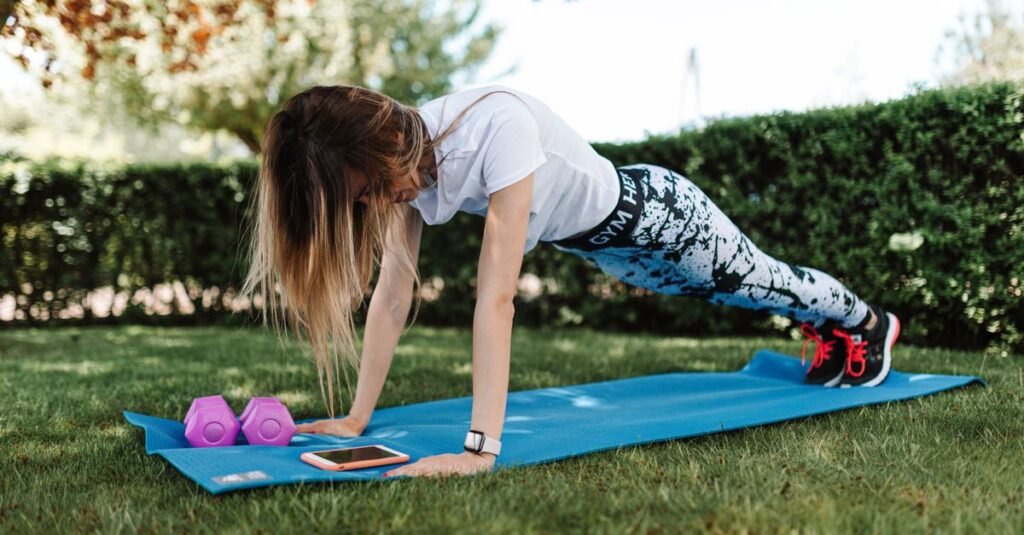

Is It Better to Exercise in a Gym or Outside?
Estimated reading time: 10 minutes
Table of Contents
- Is It Better to Exercise in a Gym or Outside?
- What matters more than where you exercise
- What the research says about outdoor exercise
- Choose the setting that supports your main goal
- For strength, equipment can make the gym worthwhile
- For aerobic activity, choose the version you’ll repeat
- Motivation: look at friction, not just preference
- Don’t let either choice leave out strength training
- A mixed routine is often the most practical option
- Safety can change the better choice from day to day
- Make the choice based on your ordinary week
- FAQ
- Is a gym or outdoor exercise better for overall health?
- Does outdoor exercise provide greater long-term health benefits?
- Does walking outside count the same as treadmill walking?
- How much physical activity should adults aim for?
- Can I combine gym and outdoor exercise?
What matters more than where you exercise
Neither a gym nor the outdoors is inherently better for your overall health. The better choice is the one that helps you exercise regularly, safely, and in a way that fits your goals. A gym makes equipment and workout conditions more predictable. Outdoor exercise can be cheaper, easier to fit into daily life, and more enjoyable if you like fresh air and changing scenery.
If you’re asking “is it better to exercise in a gym or outside?” because you’re deciding whether to buy a membership, start with what you actually want to do. Walking more doesn’t require a gym. Building a structured strength routine may be easier with one. And there’s no reason you can’t lift indoors and walk outside.
The setting matters, but it’s only part of the decision. Your activity, effort, frequency, and ability to keep going matter too.
For most adults, U.S. physical activity guidelines recommend:
- At least 150 minutes of moderate-intensity aerobic activity each week, or 75 minutes of vigorous activity, or an equivalent combination.
- Muscle-strengthening activity on at least two days a week, working the major muscle groups.
Brisk walking is one example of moderate-intensity activity. A practical way to judge that effort is that you can talk, but you wouldn’t comfortably sing. Aerobic activity can be split into shorter sessions; it doesn’t have to happen in one long workout.
Those recommendations don’t give extra credit for exercising under trees or inside a fitness center. A brisk outdoor walk and an appropriately paced treadmill walk can both contribute to your weekly activity.
That’s why comparing “the gym” with “outside” can be misleading. A gentle park stroll and a demanding gym cycling class differ in more than location. So do a heavy strength session and a long hike. To judge the setting fairly, compare similar activities and effort levels—not just where they happen.
If you’re currently inactive, the full weekly target doesn’t need to be your starting point. Begin with manageable activity and build gradually rather than trying to make up for lost time in your first week.
What the research says about outdoor exercise
Outdoor exercise has an appealing reputation: nature, daylight, space, and a break from indoor routines. But those advantages don’t establish that it produces greater long-term health benefits than indoor exercise.
A systematic review of 10 longitudinal trials—studies that followed participants over time—found limited, uncertain evidence that exercising outdoors offered additional health or behavior benefits compared with exercising indoors. The researchers called for larger, more rigorous randomized trials.
A separate review found tentative evidence that a single session of outdoor “green exercise,” meaning activity in a natural setting, may be more enjoyable or feel more positive. However, it found no consistent differences in exercise intensity or biological markers. The evidence was rated low quality, with a high risk of bias.
That distinction is important. Enjoying a walk through a park is a real reason to choose it. But feeling better during one outdoor session isn’t proof that outdoor workouts produce better long-term fitness, mental health, or exercise habits.
It’s also worth separating a leafy trail from a busy roadside. Both are outdoors, but the experience may be quite different. Findings about exercise in natural surroundings shouldn’t be applied automatically to every outdoor setting.
Use enjoyment as a personal decision factor, not as a guarantee of superior health results.
Choose the setting that supports your main goal
| Your priority | A gym may help because… | Outdoors may help because… |
|---|---|---|
| Structured strength training | Machines and free weights make resistance easier to select and adjust | Bodyweight exercises and suitable park equipment can support strength work |
| Walking, running, or cycling | You can exercise without depending on weather or daylight | Routes and scenery may make the activity more appealing |
| Keeping costs down | A membership may be worthwhile if you use the equipment regularly | Walking on a safe, accessible route can cost little or nothing |
| A predictable routine | Conditions and equipment are usually more consistent | A nearby route can remove travel and check-in time |
| Guidance or company | Some gyms offer classes or coaching | Walking with a friend or joining a local activity group may suit you |
| Accessibility and safety | Suitable indoor equipment may provide a useful option | An accessible, well-maintained route may be convenient and comfortable |
Neither column wins for everyone. A nearby gym can be convenient; one across town may be a barrier. A local park can be inviting; an uneven, poorly lit route may not be usable.
For strength, equipment can make the gym worthwhile
A gym’s clearest advantage is access to resistance equipment. Machines, dumbbells, barbells, and cable systems give you ways to train different muscle groups and adjust the challenge.
That’s useful if you want a structured strength routine or find bodyweight movements difficult to scale. A machine may let you choose a manageable load, while a range of weights allows smaller changes than moving straight from an easy bodyweight exercise to a much harder variation.
But equipment doesn’t make a workout effective by itself. You still need suitable settings, controlled technique, and resistance that matches your ability. If you don’t know how to adjust a machine, ask qualified staff for help rather than copying the person beside you.
Strength training can also happen outside or at home. The limitation is often practicality: some movements are easy to do without equipment, while others—particularly pulling movements—may need a resistance band or a suitable, secure setup.
For aerobic activity, choose the version you’ll repeat
Walking outside can be an excellent option when you have a safe route nearby. You don’t need to travel to a facility or wait for equipment, and a walk can fit around errands or a lunch break.
A treadmill offers different advantages: a stable surface, adjustable speed, and an indoor option during poor weather. Outdoor walking brings turns, terrain changes, crossings, and other conditions that affect your pace and attention.
Walking outside can count just as treadmill walking does. What matters is whether the pace and duration provide the activity you’re aiming for. Neither becomes automatically more effective because of its location.
For running and cycling, the decision may depend even more on conditions. Traffic, slippery surfaces, poor visibility, or extreme temperatures can make an indoor alternative the more sensible choice on a particular day.
Motivation: look at friction, not just preference
You might prefer outdoor exercise in theory but rarely do it because the nearest pleasant route requires a drive. Or you might like the idea of gym training but find that packing a bag and crossing town turns a short workout into a large commitment.
The useful question is: What is most likely to stop you from starting?
For a gym routine, barriers might include:
- Travel time, membership cost, or limited opening hours.
- Crowded equipment at the only time you’re free.
- Uncertainty about what to do.
- Discomfort exercising around other people.
For an outdoor routine, barriers might include weather, darkness, unsuitable routes, personal safety concerns, or boredom with the same walk.
Solve the actual obstacle. If you’re unsure how to use gym equipment, an orientation may be more useful than searching for another workout. If your outdoor route feels unsafe after work, a daytime walk or indoor option may help more than trying to push through the concern.
Classes and workout partners can provide structure, but only if their schedules fit yours. Likewise, a gym membership is useful when it gives you something you use—not simply because paying for it seems motivating.
Don’t let either choice leave out strength training
A common mistake is to treat outdoor exercise as “walking and running” and gym exercise as “cardio machines.” Both routines can overlook the muscle-strengthening part of the guidelines.
CDC guidance offers a practical starting point for strength work: 8–12 repetitions of an activity for at least one set, with two or three sets potentially providing additional benefits. Resistance should make another repetition difficult, while allowing controlled technique. Adapt movements to your ability and experience.
These examples show how movements can be made more accessible; they aren’t a complete strength program:
- Sit-to-stand from a stable chair: Place your feet securely on the floor, lean forward slightly, and stand up with control. Sit back down without dropping into the seat. A higher chair or light hand support can make it easier.
- Wall push-up: Place your hands against a sturdy wall around shoulder height. Bend your elbows to bring your body toward the wall, then press away while keeping your body aligned. Standing closer to the wall reduces the challenge.
A balanced routine needs more than those two movements. It should address the major muscle groups, including the legs, hips, back, abdomen, chest, shoulders, and arms. If you’re unsure how to cover them safely, qualified guidance can help you choose suitable exercises.
Don’t force extra repetitions after your technique starts to deteriorate. And don’t assume that using more weight or a harder variation is automatically better.
A mixed routine is often the most practical option
You don’t have to choose one setting permanently. Combining them lets each solve a different problem.
For a hypothetical adult already comfortable with brisk walking, five 30-minute walks would add up to the 150-minute moderate-intensity aerobic target. Two gym or home strength sessions could address the strengthening recommendation.
That’s an example, not a prescribed starting plan. Someone new to exercise might begin with shorter walks and build gradually. Someone who prefers cycling could use that instead, and another person might split walking into shorter periods across the day.
A flexible routine could also mean:
- Walking outside when conditions are comfortable and using a treadmill during poor weather.
- Training strength indoors while keeping outdoor walks for enjoyable activity.
- Using a home workout when neither travel to the gym nor outdoor conditions are practical.
The key is to decide your backup in advance. “If the route is icy, I’ll walk indoors” is more workable than reconsidering your whole routine whenever the weather changes.
Safety can change the better choice from day to day
Outdoor conditions deserve a quick check before you leave:
- Weather and temperature: Heat, cold, storms, and slippery surfaces may require a different route, shorter activity, or an indoor alternative.
- Air quality: Poor air quality can make outdoor exercise unsuitable, particularly for people with relevant health conditions.
- Daylight and visibility: You need to see your footing and be visible to others.
- Traffic and terrain: Crossings, uneven ground, and shared paths can affect both safety and workout pace.
- Personal security: Choose a location and time you’re comfortable using.
Indoor exercise has risks too. Poor technique, unsuitable machine settings, and training beyond your current ability can cause problems. Familiar surroundings aren’t a reason to ignore those basics.
If you have a health condition, an injury, or exercise limitations, individualized advice may help you choose appropriate activities. This is general educational information, not a personalized exercise or treatment plan.
Make the choice based on your ordinary week
Don’t judge a gym by the empty weekend morning you visited if you’ll usually train during the evening rush. And don’t judge outdoor exercise by a perfect sunny day if your available time is usually dark or cold.
Try your preferred option under the conditions you’ll actually face. After a few sessions, note whether you completed the activity you intended, how much time and money it took, and whether you’d willingly do it again. Then test the alternative if it might solve a specific problem.
For your next step, choose one realistic primary setting and one backup. That might be a nearby walking route plus an indoor option for bad weather, or a gym strength routine plus outdoor walks. You don’t need to find the universally best place to exercise—just a workable place to start, and a way to keep going when conditions change.
FAQ
Is a gym or outdoor exercise better for overall health?
Neither a gym nor the outdoors is inherently better for your overall health. The better choice is the one that helps you exercise regularly, safely, and in a way that fits your goals.
Does outdoor exercise provide greater long-term health benefits?
The available evidence is limited and uncertain. Outdoor exercise may be more enjoyable or feel more positive for some people, but that isn’t proof that outdoor workouts produce better long-term fitness, mental health, or exercise habits.
Does walking outside count the same as treadmill walking?
Walking outside can count just as treadmill walking does. What matters is whether the pace and duration provide the activity you’re aiming for.
How much physical activity should adults aim for?
For most adults, U.S. physical activity guidelines recommend at least 150 minutes of moderate-intensity aerobic activity each week, or 75 minutes of vigorous activity, or an equivalent combination. They also recommend muscle-strengthening activity on at least two days a week, working the major muscle groups.
Can I combine gym and outdoor exercise?
Yes. You don’t have to choose one setting permanently. You can train strength indoors while keeping outdoor walks for enjoyable activity, or use a treadmill during poor weather and walk outside when conditions are comfortable.