
When Is a Good Age to Go to the Gym?
Estimated reading time: 9 minutes
Table of Contents
There’s no single age when going to the gym suddenly becomes safe or useful. A teenager may be ready for supervised gym workouts, while a younger child can build strength through climbing, gymnastics, and other active play. The better test is whether the activity fits the person’s skills, they can follow instructions, and they have appropriate supervision.
If you’re a teen considering your first membership—or a parent deciding whether to allow one—separate two questions: Can you start strength training? and Can you use this particular gym? Those aren’t the same thing. Age-appropriate strengthening can happen well before a facility allows someone to use its equipment independently.
You don’t need to wait for a particular birthday to become active. But there’s also no reason to rush into an adult lifting routine just because a gym will let you through the door.
Physical activity, strength training, and gym membership are different things
“Going to the gym” can mean walking on a treadmill, attending a supervised class, learning body-weight exercises, or lifting heavy weights. Each involves different skills and demands.
Strength training—also called resistance training—means making muscles work against resistance. That resistance can come from your own body weight, a band, or weights. It doesn’t have to involve a barbell or a commercial gym.
The CDC recommends that children and teens ages 6–17 get at least 60 minutes of moderate-to-vigorous physical activity daily. Muscle-strengthening and bone-strengthening activities should each be included on at least three days a week.
That’s not a recommendation for an hour of weightlifting every day. The activity can include running around with friends, cycling, playing sports, climbing, dancing, and other enjoyable movement. Some activities contribute to more than one part of the recommendation.
A gym can be one place to get active. It isn’t the requirement, and it shouldn’t crowd out activities a young person already enjoys.
What makes sense at different ages?
Age helps you choose an approach, but it doesn’t establish a universal starting date.
| Stage | A useful starting point | What matters most |
|---|---|---|
| Younger children | Active play, climbing, gymnastics, and basic movement skills | Enjoyment, variety, and age-appropriate supervision |
| Teens new to exercise | Instruction in simple movements, body-weight exercises, bands, and suitable equipment | Learning technique and building activity gradually |
| Teens with some training experience | A structured, supervised program suited to their skills and goals | Consistent technique, appropriate resistance, and sensible progression |
| Adults beginning for the first time | An introduction matched to current ability and health | Starting where you are rather than copying someone else’s routine |
These are broad approaches, not medical age cutoffs.
Younger children usually don’t need an adult-style workout
The CDC notes that younger children generally get muscle-strengthening activity through play and don’t usually need a formal strength-training program.
Climbing playground equipment, doing gymnastics, and playing active games can give children opportunities to develop strength and movement skills. For many children, that’s a better fit than counting sets in a weights room.
The distinction isn’t that play is “easy” and gym exercise is “serious.” Play can be physically demanding. It simply gives younger children a way to move that fits their interests and stage of development.
If a child wants to join a parent at the gym, look for an appropriate supervised activity rather than treating the adult’s workout as a template. Being able to enter the building doesn’t mean every machine, weight, or class is suitable.
Teens can consider structured resistance training
CDC guidance includes structured weightlifting among possible activities for adolescents. So “teenagers should never lift weights” is too broad.
The useful question is what the training looks like. Learning a controlled movement with manageable resistance is different from copying an advanced lifting session online. A teen who understands instructions and has suitable supervision may be ready to learn, even if they aren’t ready to train independently.
There’s no need to treat 13, 16, or 18 as a universal medical threshold. Equally, reaching one of those ages doesn’t automatically make someone ready to use unfamiliar equipment without help.
How to judge readiness beyond a birthday
The following points are practical considerations, not a clinical readiness test. They can help you decide whether a gym is a sensible next step.
Can the young person follow safety instructions?
A beginner needs to listen, wait while equipment is being adjusted, and stop when something isn’t working. They should feel comfortable asking for help rather than guessing.
This matters more than looking athletic. A confident teen who ignores instructions may need more supervision than a less experienced teen who listens carefully.
Are they willing to learn before adding weight?
A useful first goal is understanding how a movement should feel and how to control it. It isn’t finding the heaviest weight they can move.
Suppose a teen wants to use dumbbells because their friends do. That interest can be a good starting point. But if every session becomes a contest over who lifts more, the training environment needs to change.
Look for instruction that rewards control and attention—not just heavier weights.
Is suitable supervision actually available?
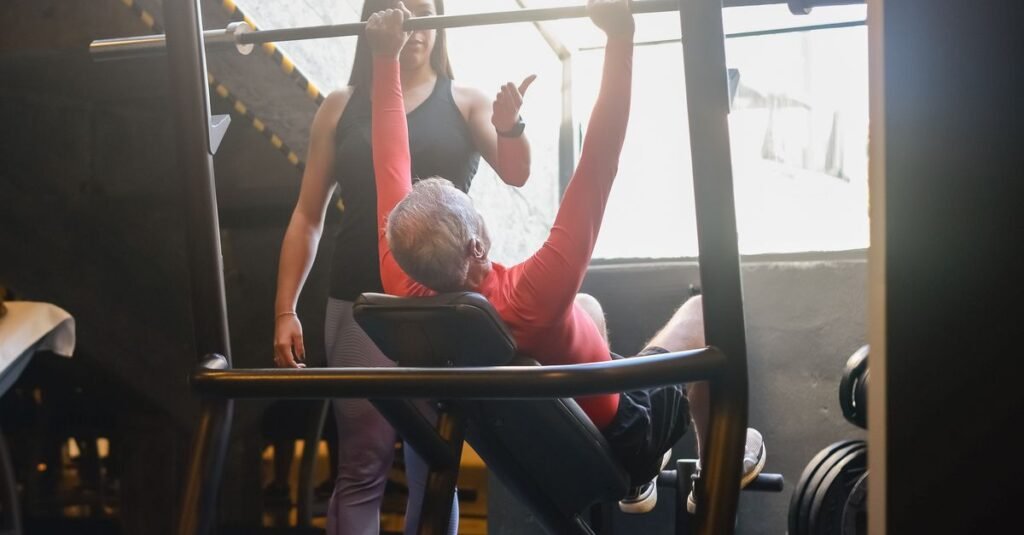
A parent standing nearby isn’t necessarily the same as someone who can teach exercise technique. Ask whether the gym has staff or a coach who can instruct young beginners, adjust activities to their abilities, and explain equipment clearly.
Supervision should be useful, not merely a condition printed on a membership form.
Does the young person want to be there?
Activities should be enjoyable, varied, and appropriate to age and skill, according to CDC guidance.
That doesn’t mean every exercise must be exciting. It does mean a gym routine is unlikely to be a good fit if the young person dislikes it and would much rather swim, climb, dance, or play a sport.
A membership is an option, not a milestone everyone needs to reach.
Check the gym’s age policy before joining
A facility’s entry rules are separate from exercise guidance. There’s no universal gym membership age established by the supplied public-health guidance, so check directly with the gym you’re considering.
Ask:
- What is the minimum age for membership and equipment use?
- Must a parent or guardian attend, or only give consent?
- Are younger members restricted to certain areas, classes, or times?
- Is an induction required before using the equipment?
- Who provides instruction for teen beginners?
Ask specifically about the activities you want to do. Permission to attend a class may not mean permission to use the free-weight area alone.
This is also a chance to assess whether the facility is a good fit. For a first-time teen, clear instruction and a welcoming environment are more useful than a huge range of equipment nobody explains.
What should a beginner teen workout include?
The supplied guidance supports age-appropriate strengthening, but it doesn’t establish a precise beginner prescription for sets, repetitions, rest periods, or weight increases. Those details should come from a qualified instructor using a suitable youth-training guideline and considering the individual.
Still, the first few visits can have a clear purpose: learn the space, learn a few movements, and leave without having turned the session into a test of maximum effort.
Start with equipment and movement instruction
Before using a machine, learn how to adjust it and how to get on and off safely. If it can’t be adjusted to fit the user, choose another exercise rather than forcing an awkward position.
For movements using body weight or free weights, instruction should explain the starting position, how to move with control, and what to change if the exercise feels too difficult.
Here are examples an instructor might use—not a complete workout:
| Movement | Basic technique focus | An easier starting option |
|---|---|---|
| Squat pattern | Bend at the hips and knees with control, keeping the feet planted | Sit down onto and stand up from a stable chair |
| Push-up pattern | Keep the body controlled while bending and straightening the arms | Push against a wall or a stable raised surface |
| Rowing movement | Pull with control rather than jerking the resistance | Use lighter resistance with instruction |
| Climbing | Choose a suitable route and follow the facility’s safety rules | Use an easier supervised climbing activity |
Body-weight exercises aren’t automatically easy. A full push-up can be demanding for a beginner; a wall version may be a much better place to learn.
Likewise, lighter weights aren’t useful if the movement is rushed or uncontrolled. Choose resistance that allows practice, not just completion.
Build activity gradually
CDC physical-activity guidance recommends gradual increases, particularly for people starting from a low activity level, to help reduce injury risk.
In practice, that means not jumping from very little movement to a demanding gym routine simply because motivation is high. It also means considering activity outside the gym. A teen who already has sports practice has a different starting point from someone who has been mostly inactive.
Progress can mean understanding a movement better, using equipment confidently, or choosing an appropriate exercise without prompting. Adding weight is only one form of progress.
Common mistakes that make starting harder
Copying someone else’s workout
A friend’s routine or an online video may assume experience, equipment knowledge, and a workload a beginner doesn’t have.
Borrowing an exercise idea is one thing. Copying the full session—including the weight, volume, and intensity—is another. Ask an instructor to help adapt it.
Treating every session as a competition
Trying to keep up with a stronger friend can push a beginner toward resistance they can’t control. Train together if it makes exercise more enjoyable, but use individual exercises and loads where needed.
Assuming a gym replaces daily movement
A few gym visits don’t turn the CDC’s daily activity recommendation into a weekly one. Walking, active play, sport, and other movement still matter.
The reverse is also true: a teen who is active outside the gym isn’t missing an essential ingredient just because they don’t have a membership.
Ignoring pain to finish the workout
Exercise can feel effortful, but pain isn’t a challenge to push through. Stop an activity that causes pain and get help rather than repeatedly testing it.
If a young person has an injury, ongoing symptoms, or a medical condition that may affect exercise, seek individualized advice from an appropriate healthcare professional. General activity guidance can’t determine what’s suitable in those circumstances.
So, should you start now or wait?
If you’re interested, the gym allows your age group, and appropriate instruction is available, an introductory visit can be a reasonable next step. You don’t need to begin with heavy weights—or commit to a complicated program.
If suitable supervision isn’t available, or the gym doesn’t permit your age group, you can still build strength through age-appropriate body-weight activities, bands, climbing, sports, or supervised programs elsewhere.
For a parent, the most useful next move is to contact the facility together and ask about its age policy and beginner instruction. For a teen, ask for help learning a few basic movements before choosing a routine. The right starting point is the one you can do safely, understand, and want to keep doing—not a particular birthday.
This article provides general educational information, not an individualized exercise or medical plan.
FAQ
What makes sense at different ages?
Age helps you choose an approach, but it doesn’t establish a universal starting date. These are broad approaches, not medical age cutoffs.
How to judge readiness beyond a birthday
The following points are practical considerations, not a clinical readiness test. They can help you decide whether a gym is a sensible next step.
Check the gym’s age policy before joining
A facility’s entry rules are separate from exercise guidance. There’s no universal gym membership age established by the supplied public-health guidance, so check directly with the gym you’re considering.
What should a beginner teen workout include?
Still, the first few visits can have a clear purpose: learn the space, learn a few movements, and leave without having turned the session into a test of maximum effort.