
Does Going to the Gym Stop Height Growth? What Teens and Parents Should Know
Estimated reading time: 10 minutes
No—going to the gym does not, by itself, stop height growth. According to the American Academy of Pediatrics (AAP), well-designed, supervised strength training has not been shown to stunt growth or harm healthy growth plates in children and teenagers.
The important distinction is between learning to train and simply trying to lift as much as possible. A teenager practicing controlled movements with suitable resistance is doing something very different from attempting a heavy lift without instruction.
If you’re a teen worried about losing height—or a parent deciding whether gym training is appropriate—the useful question isn’t just “Are weights safe?” It’s “Does this training match the young person’s ability, and is someone qualified helping them do it safely?”
What the evidence says about lifting weights and height
The concern that lifting weights makes children shorter is not supported by the pediatric guidance and reviews supplied here. The AAP reports no apparent negative effect on linear growth, meaning growth in height, or on growth-plate health from appropriately designed youth resistance training.
“Resistance training” is broader than heavy barbell lifting. It includes exercises in which muscles work against resistance, such as:
- Bodyweight squats and push-ups.
- Exercises with resistance bands.
- Movements using appropriately selected dumbbells.
- Exercises on machines that fit the user.
So a recommendation that young people can strength train is not a recommendation that every young person should train like an adult powerlifter.
There are also limits to the evidence. A review of youth resistance-training injuries noted that comprehensive injury-surveillance data were lacking. Research on supervised programs can tell us about those settings; it cannot guarantee the safety of every unsupervised gym session, overloaded machine, or lifting challenge.
The reasonable conclusion is reassuring but specific: properly designed, supervised strength training has not been shown to stunt growth. Unsafe lifting can still cause injuries.
Why growth plates cause concern
Growth plates are areas of developing cartilage near the ends of growing bones. They help bones lengthen during childhood and adolescence. As physical development finishes, these areas mature and close.
A serious growth-plate injury can sometimes affect the growth of the injured bone. That possibility deserves attention—but it does not mean that putting resistance on a growing body automatically damages it.
Reviews have described growth-plate injuries associated with youth lifting. Many of the reported cases involved poor technique, unsuitable loads, or a lack of qualified supervision. In contrast, the prospective studies discussed in one review did not report growth-cartilage injuries when young people trained under professional instruction.
That difference matters. An injury during an uncontrolled lifting attempt shows that unsafe lifting can be harmful. It does not establish that ordinary, well-coached resistance training stops height growth.
It’s also worth separating two concerns:
- Training affecting overall height: appropriately designed youth strength programs have not been shown to do this.
- A particular injury affecting bone growth: a severe growth-plate injury can sometimes do this and needs medical assessment.
Neither “all weights damage growth plates” nor “growth plates can never be injured” is accurate.
What age can a child or teenager start strength training?
There isn’t one birthday that makes strength training suitable for everyone.
Ohio AAP guidance emphasizes physical and cognitive readiness rather than a strict minimum age. A young person needs to be able to follow directions, practice a movement, respond to corrections, and respect basic safety rules.
For a parent, these questions are more useful than an age cutoff:
- Can your child follow instructions consistently?
- Can they stop when asked rather than squeeze out one more attempt?
- Are they willing to practice without competing over weight?
- Is appropriate equipment available?
- Can a qualified adult supervise and correct technique?
A child who follows instructions carefully may be ready for simple resistance exercises. An older teen who ignores corrections or repeatedly attempts weights they cannot control may need a different approach.
Readiness also changes from exercise to exercise. Being able to perform a controlled bodyweight squat does not automatically mean someone is ready for a loaded barbell squat. Each new movement requires its own learning period.
How to make youth gym training safer
The safest starting point is not a particular dumbbell weight or a copied workout. It’s a training environment built around learning, suitable equipment, and gradual progression.
Start with movements the young person can control
Technique should come before added resistance. The first goal is to perform the intended movement without rushing, losing balance, or needing someone else to rescue the attempt.
For example, a teen learning to squat might begin by standing in front of a stable bench, bending at the hips and knees, lightly touching the bench, and standing back up. The bench provides a clear target. A coach can adjust its height or the movement range if needed.
The teen should practice keeping their feet stable and moving smoothly. If balance or control is difficult, there’s no need to add a dumbbell yet.
For a pushing exercise, a wall push-up can be an easier starting option than a floor push-up. Keeping the body aligned, bending the elbows under control, and pressing away from the wall lets the learner practice the movement with less resistance. A coach can then choose a suitable next step.
These are examples, not a required routine. The right starting exercise is one the individual can understand and perform well.
Choose equipment that actually fits
A machine is not automatically suitable just because it has a seat and a diagram. Equipment built for adults may not adjust enough for a smaller user. If the handles are difficult to reach or the machine forces an awkward position, choose another exercise rather than forcing the fit.
Free weights also need careful selection. A manageable dumbbell allows deliberate movement; an oversized one may encourage swinging, twisting, or shortening the exercise just to finish it.
The best tool is the one that lets the young person practice the intended movement safely—not necessarily the most impressive-looking piece of equipment.
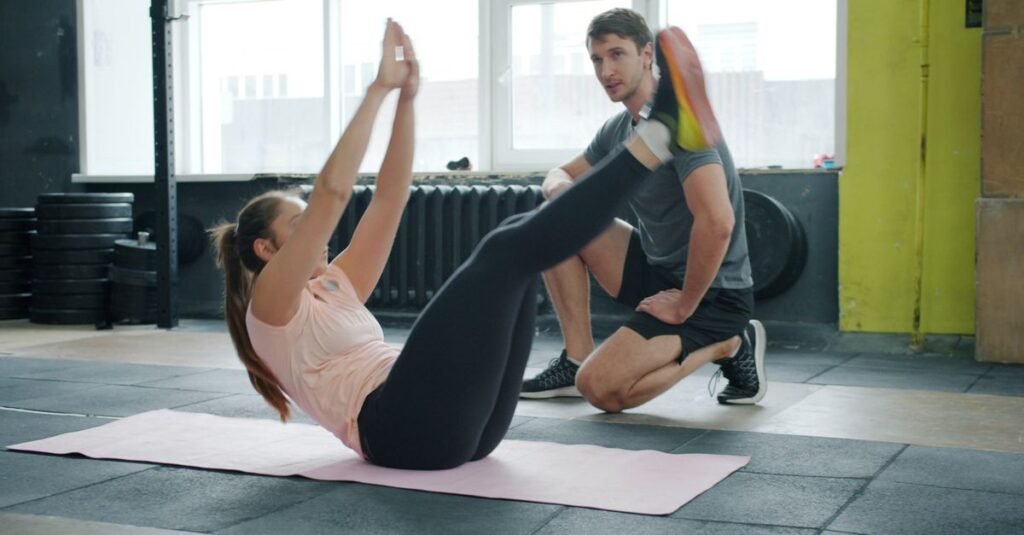
Get supervision that includes coaching
“An adult is somewhere in the room” is not the same as qualified supervision.
Someone experienced in youth resistance training should watch technique, select suitable exercises, and recognize when a load needs to be reduced. They should also be willing to change the plan when a young person is tired, distracted, or struggling with a movement.
For parents considering a gym or training program, useful questions include:
- Who teaches beginners how to use the equipment?
- Does the instructor have experience coaching children or teenagers?
- How closely are new exercises supervised?
- How do they decide when to increase resistance?
- What happens if an exercise causes pain?
Clear answers are more useful than a vague promise that the program is “safe for all ages.”
Increase resistance gradually
Youth training guidance consistently favors gradual progression rather than chasing heavier weights. There’s no single load or progression schedule that suits every growing person.
A practical principle is to keep the resistance manageable enough that technique stays consistent. If adding weight causes jerking, loss of balance, or repeated form breakdown, the increase is not helping the learner practice the exercise well.
Imagine a teen who performs a controlled squat with a light dumbbell. The next available dumbbell is much heavier, and using it makes them tip forward. They don’t have to use it simply because it’s the “next” weight. A coach might keep the current load, choose equipment with smaller increments, or continue practicing before progressing.
Progress can mean better control and more consistent technique—not just a larger number.
Keep maximal lifting separate from beginner training
A maximal lift is an attempt to lift the greatest weight possible, typically for one repetition. It is not necessary for a beginner to make progress with general strength training.
An AAP clinical report cited in the research advises preadolescents and adolescents to avoid maximal lifts, powerlifting, and bodybuilding until physical and skeletal maturity. That is more cautious guidance than the broad statement that young people can participate in supervised resistance training.
For a teen starting at the gym, testing the heaviest possible lift is a poor substitute for learning. Copying an adult’s competitive lifting program also overlooks differences in experience, maturity, and coaching needs.
When to stop an exercise or get medical advice
Pain is not a useful test of whether a young person is “working hard enough.” Stop the exercise and reassess if there is pain, loss of control, or repeated breakdown in technique.
An injury or persistent symptoms should be assessed by a healthcare professional rather than worked around indefinitely. Don’t assume pain near a joint is harmless simply because the weight looked light.
Young people with an existing medical condition or a history of injury may need modifications before starting. The AAP report specifically identifies poorly controlled high blood pressure as a reason to consider medical clearance.
That doesn’t mean every child needs extensive testing before doing a bodyweight exercise. It means the training plan should account for the person, not just their age or enthusiasm.
This article provides general education, not an individual medical assessment or training prescription.
Can gym training make you taller instead?
The opposite claim—that lifting weights will increase final adult height—isn’t supported by the supplied evidence either.
The AAP describes benefits of appropriate resistance training for strength and bone health. Those are worthwhile outcomes, but stronger muscles and healthier bones are not the same as longer bones or extra adult height.
A teen shouldn’t have to choose between two misleading promises: “weights will make you short” and “this workout will make you taller.” Neither is a sound reason to plan a gym program.
A better goal is to develop strength and movement skills safely while allowing normal growth and development to continue.
What to do before the first gym session
If height is the main worry, you don’t need to reject strength training on that basis. Instead, arrange a beginner session with someone qualified to coach young people, and make the first priority learning a few manageable movements.
For teens, a useful request is: “Can you check my technique and help me choose a weight I can control?” For parents, ask how the instructor supervises new exercises and decides when to progress.
That shifts the decision away from a height-stunting myth and toward the things that genuinely matter: appropriate instruction, suitable resistance, and knowing when to stop.
Frequently asked questions
Does going to the gym stop height growth?
No. Well-designed, supervised strength training has not been shown to stunt growth or harm healthy growth plates in children and teenagers. Unsafe lifting can still cause injuries.
Can weight training damage growth plates?
Resistance training does not automatically damage growth plates. A severe growth-plate injury can sometimes affect the growth of the injured bone, so pain or a suspected injury should be assessed by a healthcare professional.
What age can a teen start strength training?
There isn’t one birthday that makes strength training suitable for everyone. Readiness depends on whether the young person can follow directions, respond to corrections, respect safety rules, and train with qualified supervision.
Should teens attempt maximal lifts?
Maximal lifts are not necessary for beginners. An AAP clinical report cited in the research advises preadolescents and adolescents to avoid maximal lifts, powerlifting, and bodybuilding until physical and skeletal maturity.
Does lifting weights make you taller?
The supplied evidence does not support the claim that lifting weights increases final adult height. Appropriate resistance training can benefit strength and bone health, but those benefits are not the same as longer bones or extra adult height.